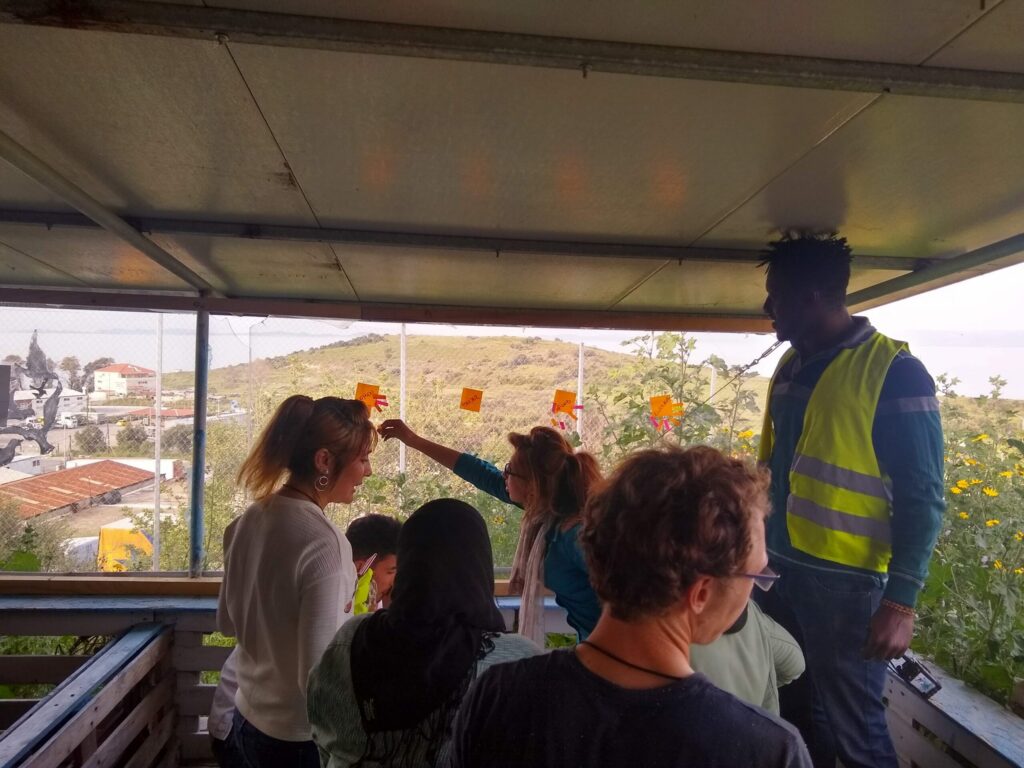
To achieve a successful action plan with your PAR participants – to address a problem together – multiple focus groups are often necessary. How can we, as Participatory Action Researchers, ensure that participants develop a successful action plan, one they feel ownership of and are eager and enthusiastic to work on? In this blog, we present 8 tips to guide you through!
- Design your focus group beforehand by creating a program with components that gradually lead to the goal of your focus group. Allow invited guests to contribute ideas. Prepare well, but also be open to improvisation! Often, we think we’ve created a wonderful program in advance, only to find that the actual needs of the group lie elsewhere. Therefore, try not to stick too rigidly to your program (and the times), but instead be flexible and improvise if the group’s needs change.
- Share your results! Ensure that you visualize the results of the PAR in such a way that participants gain a clear understanding and overview. This forms the basis for the co-creation process! Allow room for participants to make additions or changes. Don’t worry if you feel that some information is missing in your visualization! Put a question mark there, inviting participants to provide additional input.
- Maintain an open, non-judgmental attitude. As a facilitator of the focus group, maintain an open, non-judgmental attitude throughout the entire session so that participants feel comfortable sharing their ideas. Stay curious about their ideas, ask questions, and communicate from genuine interest. Rejecting ideas (even if done kindly) is unacceptable! Trust that the group will filter out the best ideas, you don’t need to do that for them.
- Facilitate “aha” moments for your participants. Give participants the opportunity to make discoveries about the problem themselves. This is also known as ‘analyzing with participants’. By allowing them, for example, to make associations between different components of your results, they will experience ‘aha’ moments, leading to more enthusiasm and ownership over the new ideas that emerge. These are important building blocks for motivating groups of people to work together!
- No debate or discussion – with losers – but dialogue – with winners. In a debate, the one who ‘shouts’ the loudest or has the most convincing arguments often ‘wins’. This means there are always many losers who go home disappointed. This is deadly for motivation! As action researchers, we don’t facilitate debate or discussion, but dialogue. In dialogue, we all open ourselves to each other’s ideas and build on them. Everyone has a share in the end result, so participants are all ‘winners’. Be vigilant as a facilitator for signs of potential discussion and guide participants back to dialogue.
- Make agreements. At the end of the focus group session, make concrete agreements with the participants. Usually, after a single focus group, there is not yet a concrete action plan, so another focus group session is necessary. Agree on a date, place, and time with those interested and write down the names and contact information of the participants who want to participate. Invite new participants if necessary or ask participants to bring along any interested parties.
- Close positively. A focus group can sometimes be quite burdensome, especially when dealing with long-standing issues or problems that people are greatly affected by. Depending on the purpose of your focus group (which in turn depends on the stage of the PAR you are in), this could involve collectively visualizing the ideal situation, prioritizing the best solution directions, or using a positive energizer. If people leave with a positive feeling, they are likely to feel the energy and motivation to come again – and when the action plan is ready, to get started with it!
- Enjoy the focus group! Last but not least: don’t forget to enjoy yourself! I often see facilitators very nervous before a focus group, and I also sometimes get quite nervous. In those moments, don’t forget the following two things. Firstly, bringing people together constructively around an issue (who might never have come together otherwise) is already a step in the right direction. You’ve already won that! Secondly, I notice in practice that if you can radiate confidence in the process, in yourself, and especially in your participants, it has an enormously positive effect on the atmosphere in the group and the outcomes. Your own enthusiasm – for example, when you hear a new idea from participants – is contagious. So, even if it’s your first time leading a focus group: have confidence, radiate, smile, and enjoy it!
Want to know more? In our methodology section, you will find the ‘focus groups’ method, where you can learn all about facilitating focus groups. The Participatory Action Research handbook, written by 7Senses founder Madelon Eelderink, which was published in January 2020, describes in detail how to conduct focus groups at different stages of your Participatory Action Research. You can order the book here.