PAO Eindrapport
Download
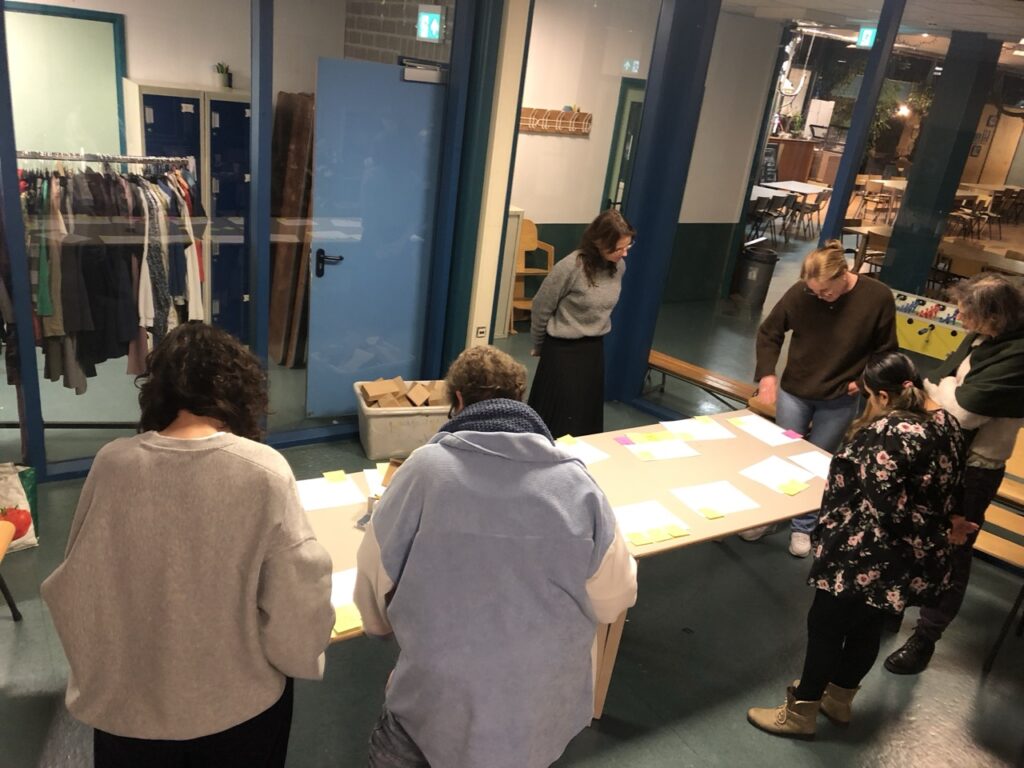
The original PAR objective was: “To co-create and implement, together with stakeholders, a plan to incorporate more experiential knowledge from families and their children within the target group into the foundation’s services, so that families and children receive better support from the foundation and/or other organisations.” This objective has gradually shifted somewhat to “Co-creating and implementing a plan with stakeholders to bring the foundation’s organisational framework closer to the lived experience of the child and the family (on a low income).”
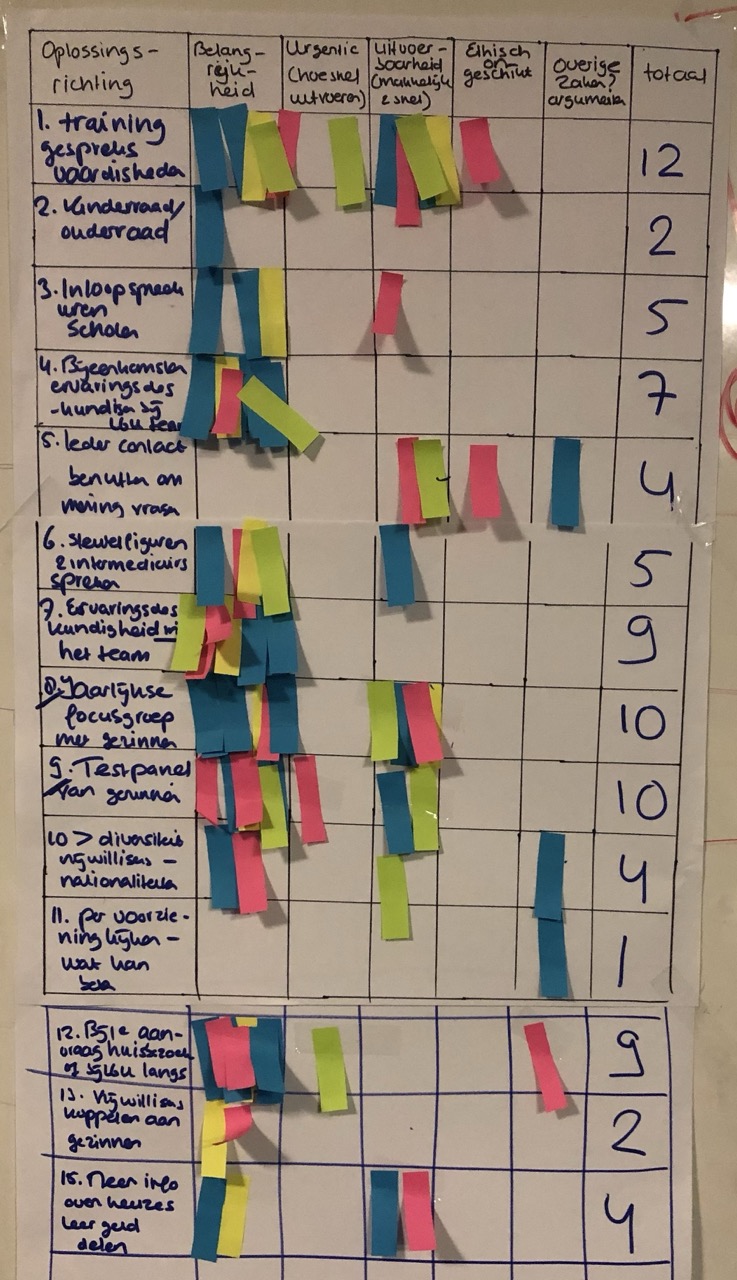
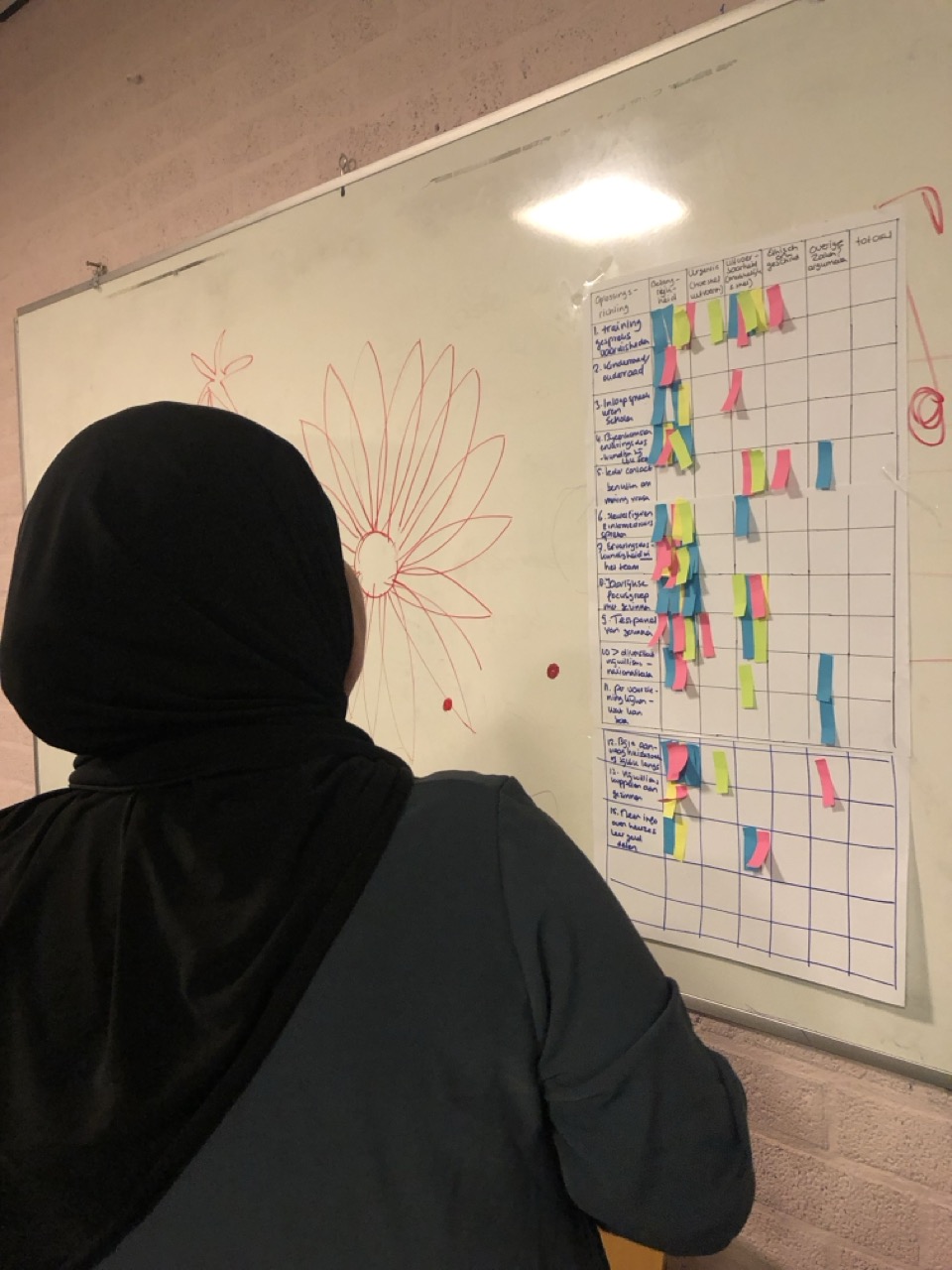
Over the course of seven months, the first six stages of Participatory Action Research have been completed. Sixteen potential solutions have been identified, one of which will be implemented: the Improvement Group. This is a group of (12–15) families, experts by experience, volunteers, board members and staff who meet four times a year to identify bottlenecks and areas for improvement, explore experiences and opinions, evaluate policies and services, propose and test new ideas or plans, and gather perspectives.
It is interesting to note that this solution differs from the one previously devised by the organisation (drawing on the practical expertise of volunteers) and that it is genuinely supported by the involvement of a diverse group of participants.
Given the high level of commitment shown by a core group of regular participants in the PAR, there is a great deal of confidence that those involved can take this solution forward and are likely to want to play a role in it themselves in the longer term. One participant says:
‘Thank you once again for your excellent support during the meetings. I look forward to the next improvement group and hope to continue contributing in this way to improvements where they are needed.’
In light of the (revised) PAR objective – “Bringing the foundation’s organisational framework closer to the lived experience of the child and the family (on a low income)” – it can be concluded that the outcomes of the PAR, the Improvement Group, can make a very valuable contribution to this. This is because, through dialogue, it gathers structural and valuable input on that system and living environment, and considers concrete ideas and solutions to improve services for children and their families based on that living environment. This is a very valuable addition to the quantitative survey that the foundation sends out annually.
The impact cannot yet be measured, as the Improvement Group has yet to get underway. However, I would like to point out that, in addition to the actual solution, the entire process has yielded significant benefits. The interviews alone have provided a wealth of valuable information for the foundation (see also the report). Furthermore, the collaboration of a broad group of stakeholders generated a great deal of understanding, enthusiasm and energy. And the insights from this session were immediately incorporated into the organisation. For example, during a retreat where decisions for the year 2026 were made.
Furthermore, in addition to its value for the foundation, the solution may also provide relevant input for improving other facilities in Utrecht. The PAR process is a fine example for social partners of the kinds of solutions that can be achieved by working together on an equal footing with various stakeholders (the community), including the target group, and will hopefully inspire others to do the same.