Project details

Start date: March 2026
Status: In progress
Country: Netherlands
Location: Maassluis

Samen zijn wij Maassluis

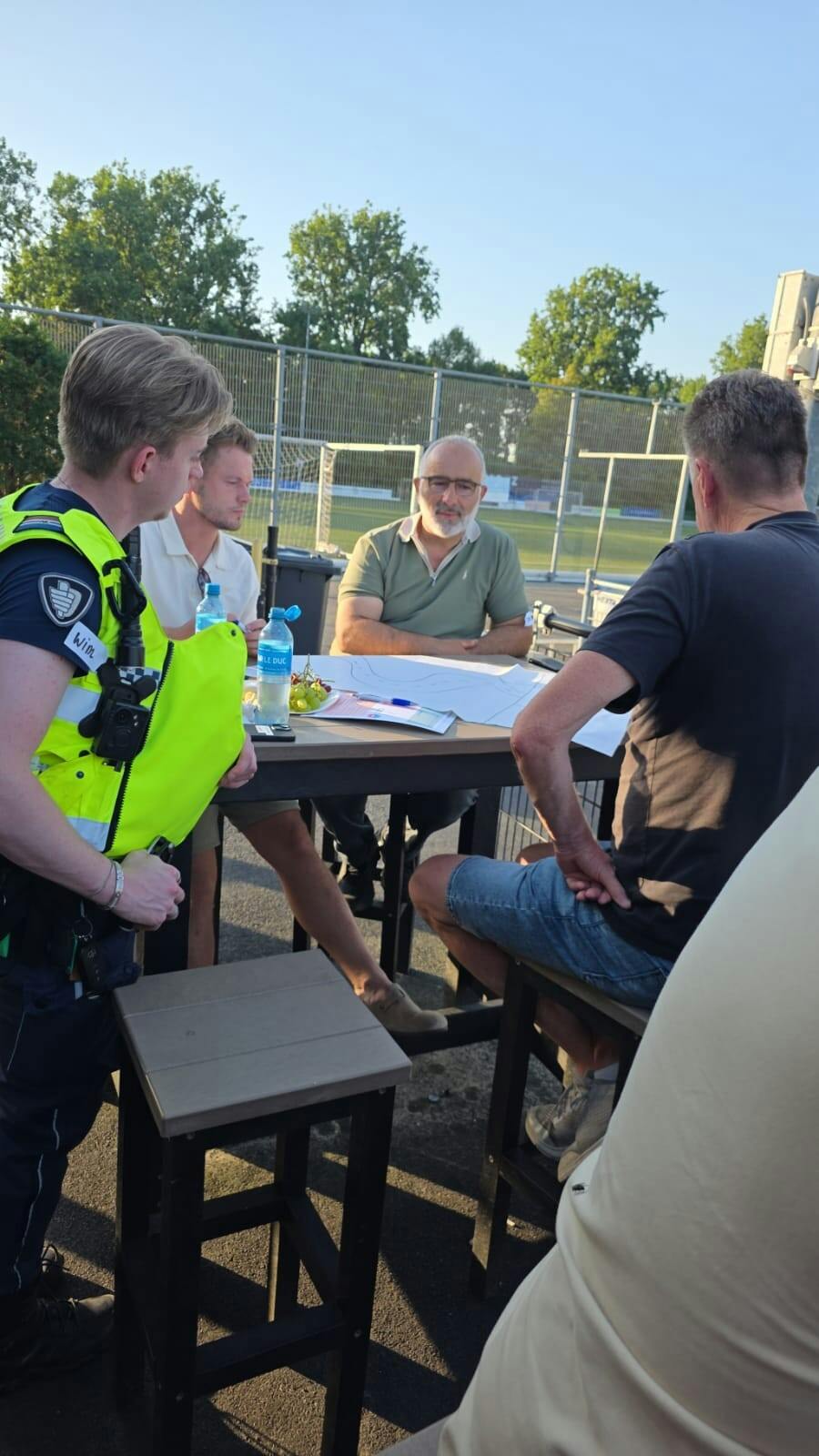
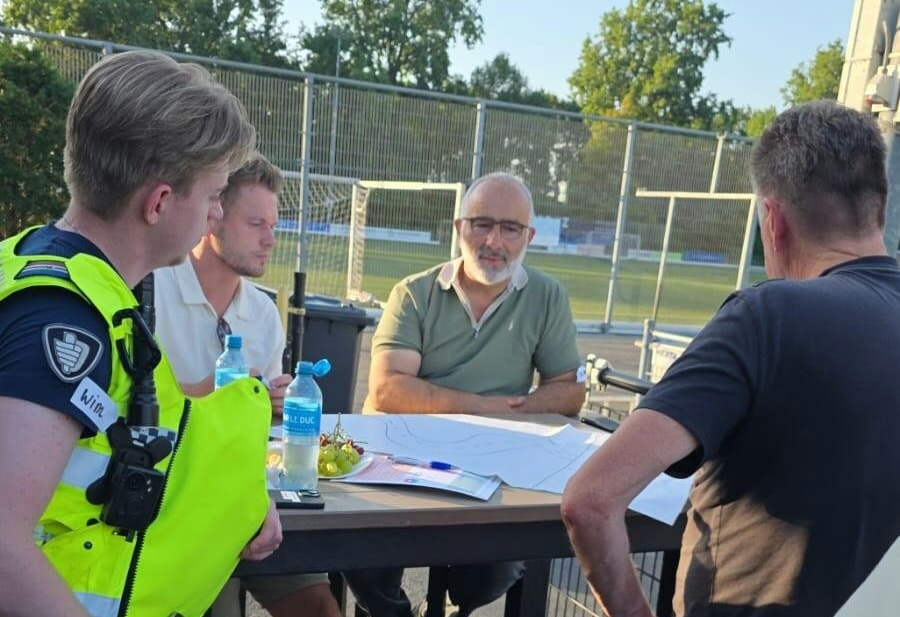
In March 2026, SamenzijnwijMaassluis launched a new neighborhood initiative, a Participatory Action Research project, in the area around Palet and Zwembad Dolfijn. This means that local residents, business owners, professionals, and the municipality are taking action together. This initiative is guided by 8 Participatory Action Researchers (the PAR team), but in Participatory Action Research, we do it together. We listen to each other’s experiences, share insights, and look for ways to improve.

“Everyone in the neighborhood is welcome to participate, and there is a shared responsibility. This way, everyone works together, step by step, to improve the neighborhood!”
Situation

The Sluispolder-Oost neighborhood in Maassluis is facing increasing social and livelihood insecurity issues, as well as a rise in the number of requests for youth assistance. Through the municipal partnership centered on the MVS Youth Model (MVS stands for Maassluis, Vlaardingen, and Schiedam), efforts are underway to identify knowledge and methods for working together with residents to help young people grow up healthy, safe, and with opportunities in their own neighborhood. For this reason, a Participatory Action Research project was launched in this neighborhood in March 2026, focusing on families with children aged 0–10.

PAR Design

PAR-goal

The goal of the project is to identify and resolve families’ questions and problems at an early stage within the neighborhood, using structures set up by residents and the “Voorveld” (informal organizations) themselves. Following an exploratory phase, the main question was formulated as follows: “How can we work together to ensure that children ages 0 to 10 can grow up happily in the neighborhood and that parents can raise their children with confidence? With as much support as possible close to home, in and from the neighborhood itself.”

Main question

How can we work together to ensure that children ages 0 to 10 can grow up happily in the neighborhood and that parents can raise their children with confidence? By providing as much support as possible close to home, within and from the neighborhood itself.

Methods

To answer this question, local residents, business owners, professionals, and the municipality joined forces. The project is being guided by eight Participatory Action Researchers (the PAR team): six action researchers from the municipality, residents, and youth services, and two action researchers from SevenSenses. Various methods have been applied in this PAR:

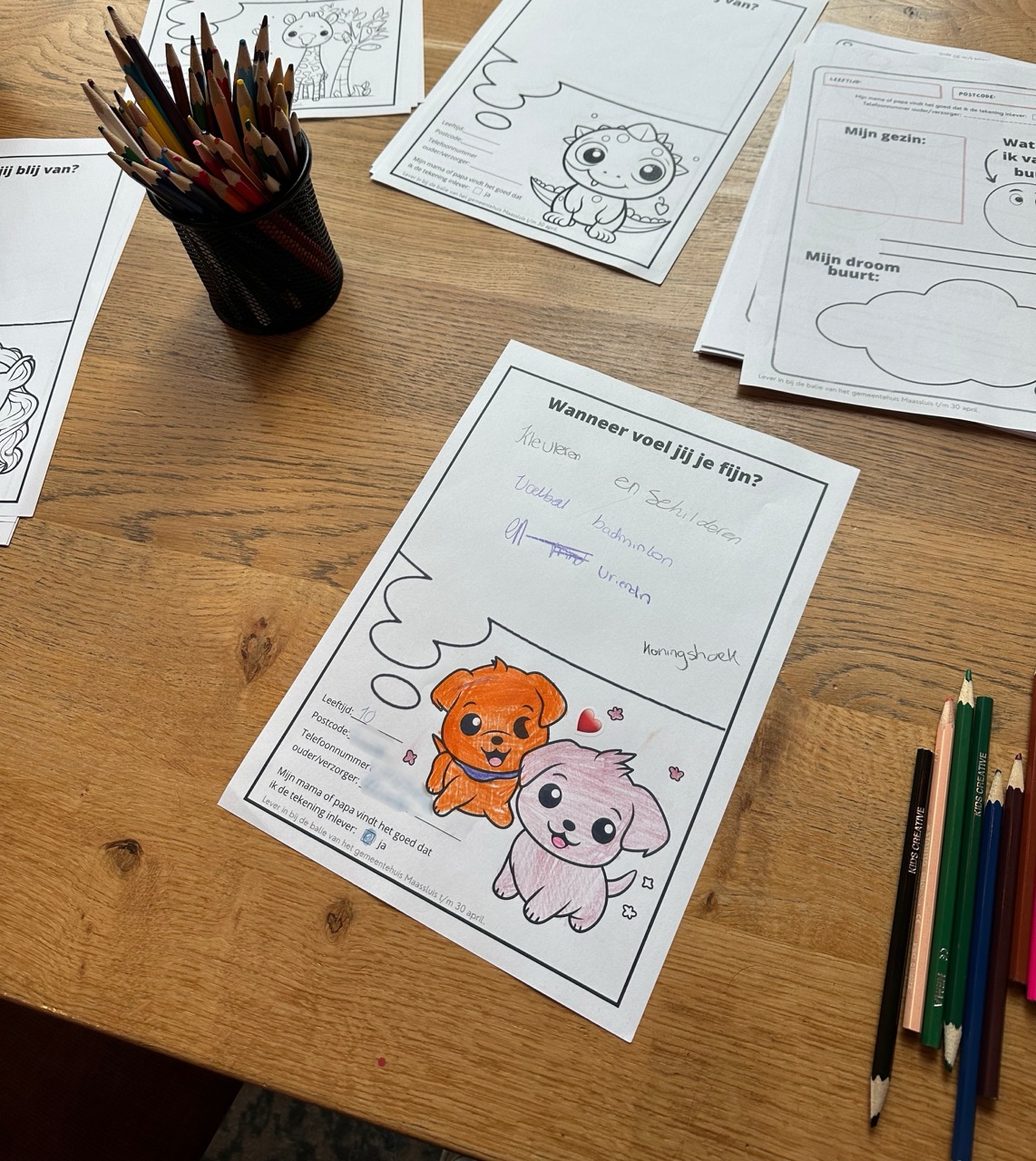
  • Coloring with kids as conversation starters. At the Doe Mee Markt in Maassluis, we were present with coloring sheets for children. Children aged approximately 6 to 12 could color in these sheets. Based on this, we started a conversation with them.
  • During an orientation session, informal conversations were used to determine what did and did not fall under the scope of the PAR, as well as who needed to be involved in the PAR. The researchers were also able to build rapport and trust with the participants.
  • Next, the study examined the system and the perspectives of various stakeholders in the neighborhood. To this end, interviews were conducted with 63 participants, in addition to 46 informal conversations. These interviews were analyzed.
  • A visualization was created to share the insights from the interviews. These were presented during four focus groups attended by a total of 35 participants. The participants’ aspirations and proposed solutions were also examined. After analyzing these initial sessions, it became clear that a little more was needed to develop concrete action plans together with the participants. Therefore, a new visualization was created, along with a video to introduce it.
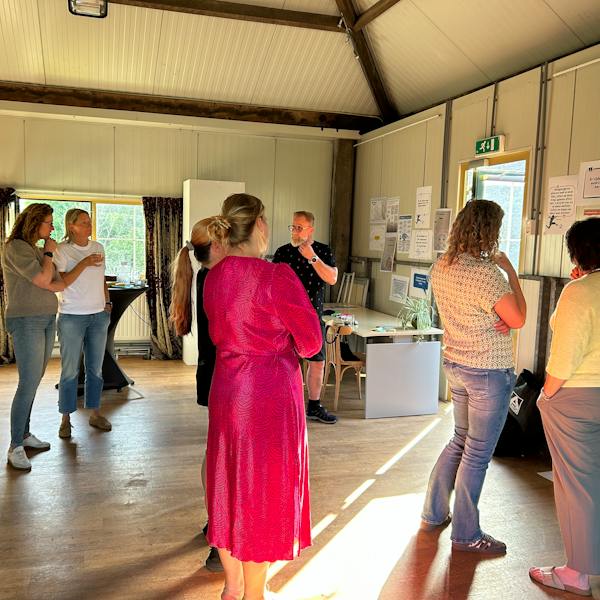
  • Next, two focus groups and one workshop were organized, with a total of 49 participants, to work on the action plans. The participants selected five issues for which they wanted to develop action plans. To that end, they first worked together on a “Road to Progress.” In September, a series of workshops will be held with the groups to develop concrete action plans so that they can implement them on their own.

Outcome

Preliminary Results

Since the project is still in full swing, we cannot yet share any final results. However, there are some important interim results worth noting. For example, eight people from the municipality, youth services, and the local community have been trained in PAR and have been able to apply the methodology in Maassluis. In addition, a total of 125 stakeholders have been consulted on the issue. During the focus groups, a wide variety of stakeholders were able to contribute their ideas on the issue and collaborated with one another in a positive manner. Subsequently, broad plans were drawn up to foster greater contact among residents, make the neighborhood safer, create a stronger sense of community and engagement in neighborhood activities, and ensure better communication and visibility within the neighborhood, as well as increased resident participation. These were still rough plans (outlined in a “road to progress”) that the groups will work together to flesh out in September 2026.

Project images