What makes Hoogeveen a great place to grow up and raise a family? And what do parents need to feel at home, connected, and supported there? These questions served as the starting point for the participatory action research project.
A Hoogeveen where families feel welcome and at home, and where there are suitable opportunities throughout the year to do things together, play, and meet others. Parents can easily connect with other parents and experience a greater sense of connection, shared understanding, and support. Children have safe and appealing places to play where parents can also enjoy spending time.
There’s room for a variety of needs: for parents who actively seek out connections, as well as for parents who are mainly looking for a pleasant place to spend time with their family.
Work with parents to explore what is needed to make Hoogeveen more family-friendly and, based on their experiences, needs, ideas, and possibilities, develop concrete plans that can be implemented in collaboration with parents and other stakeholders.
What do parents think is needed to make Hoogeveen more family-friendly, and how can we work together to make this happen?
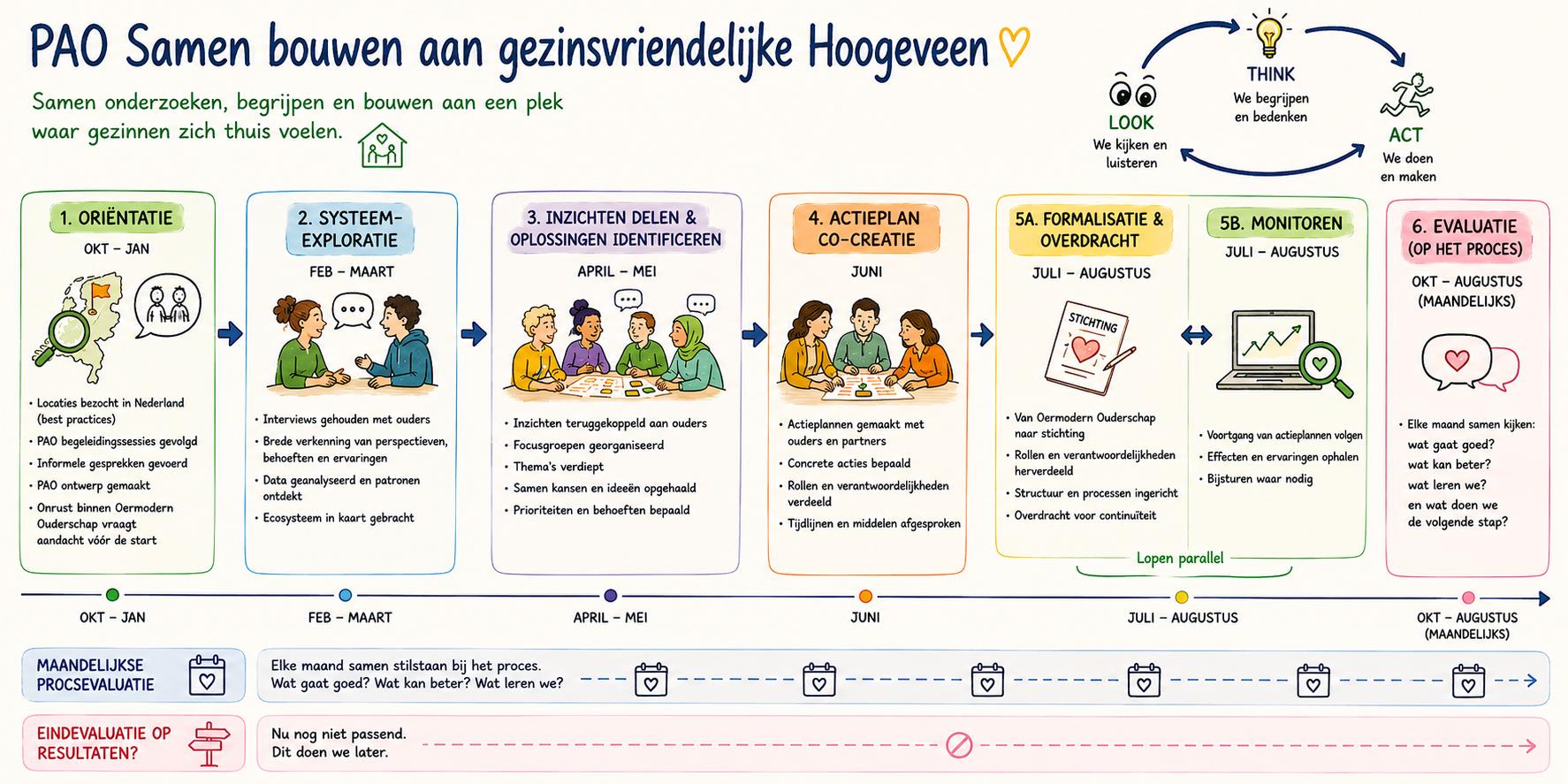
The PAR community consists of parents from Hoogeveen, parents involved with Oermodern Ouderschap, and partners from the local Kansrijke Start coalition. In addition, knowledge and inspiration were drawn from best practices in the Netherlands.
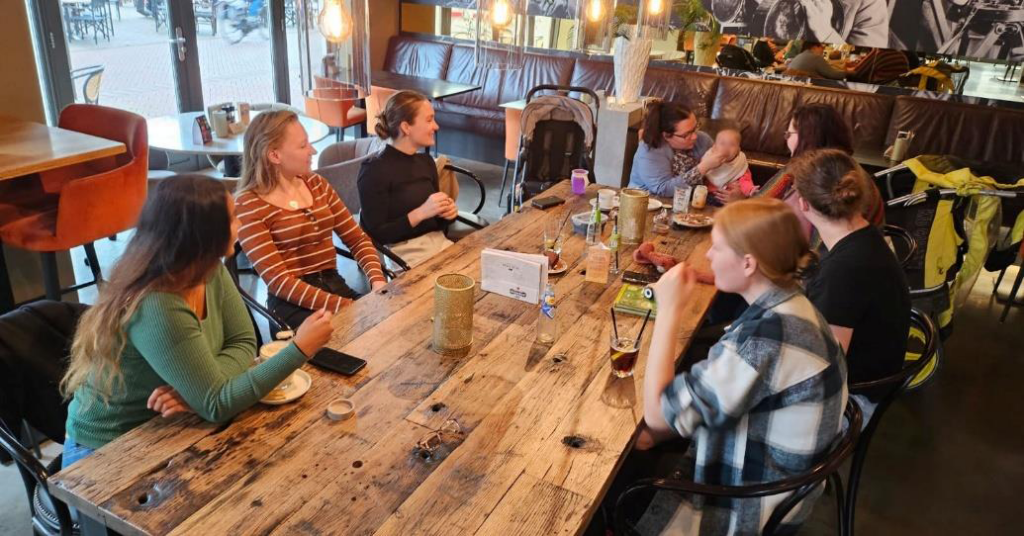
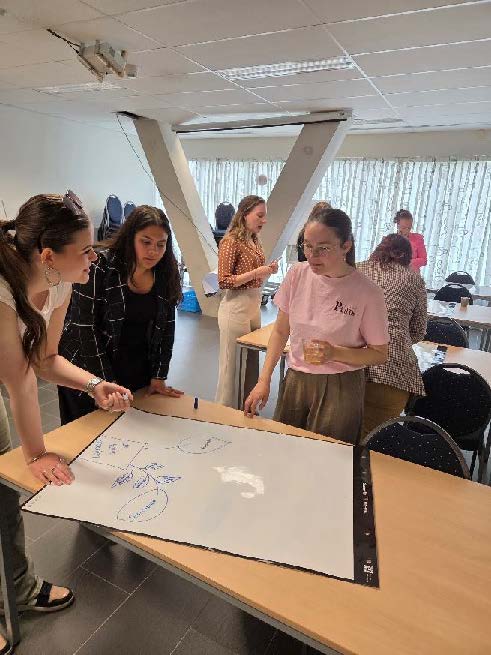
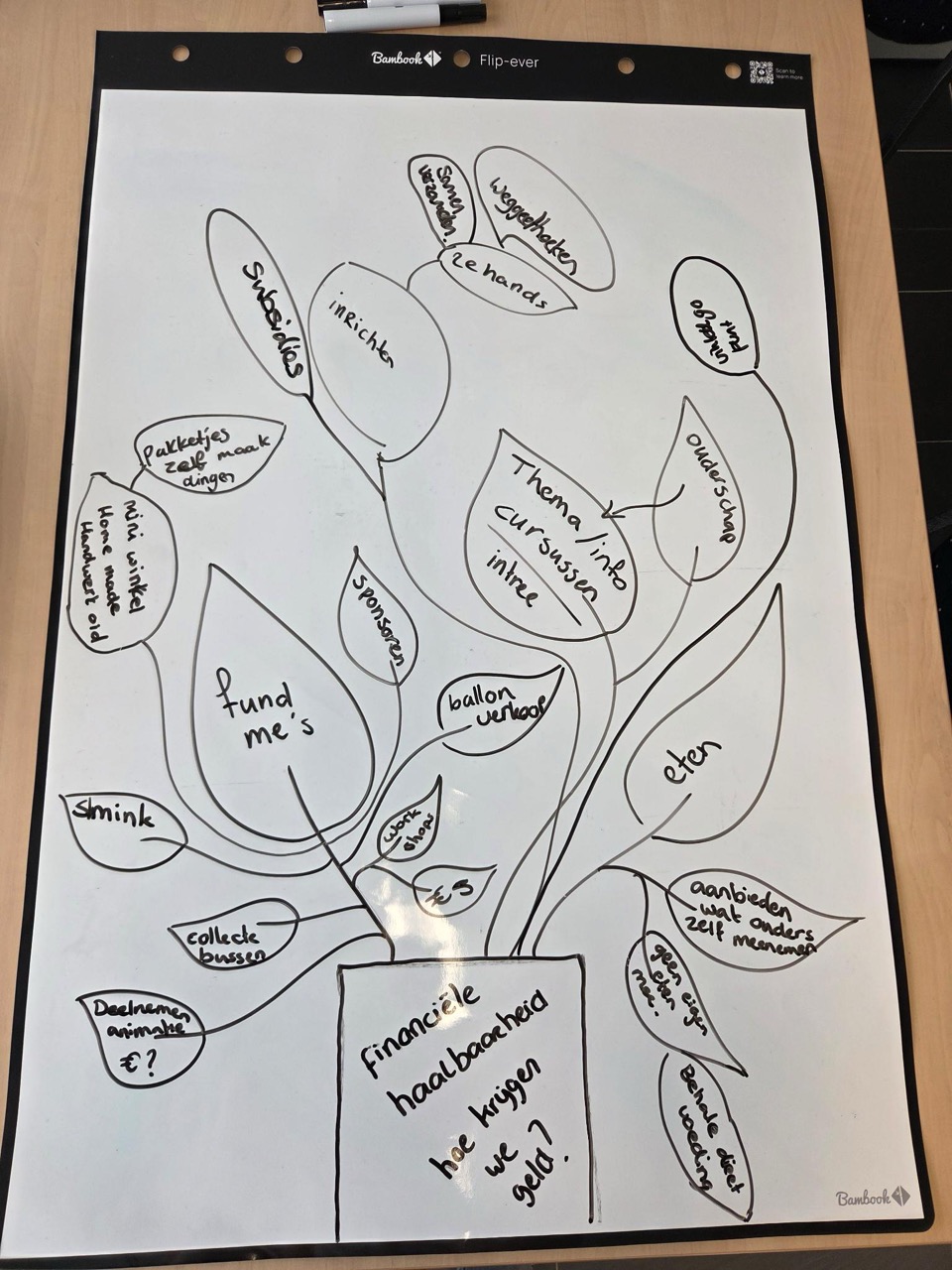
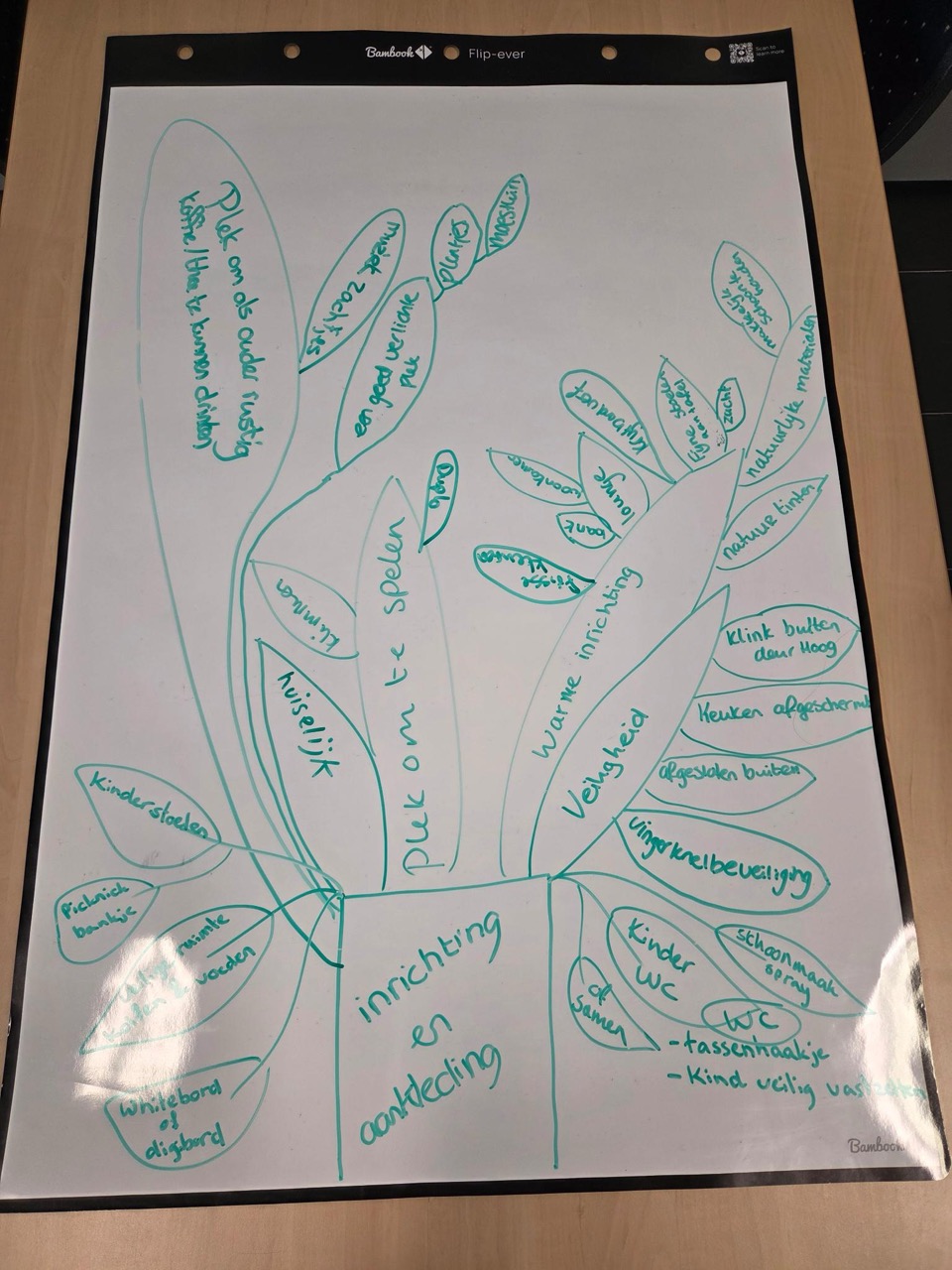
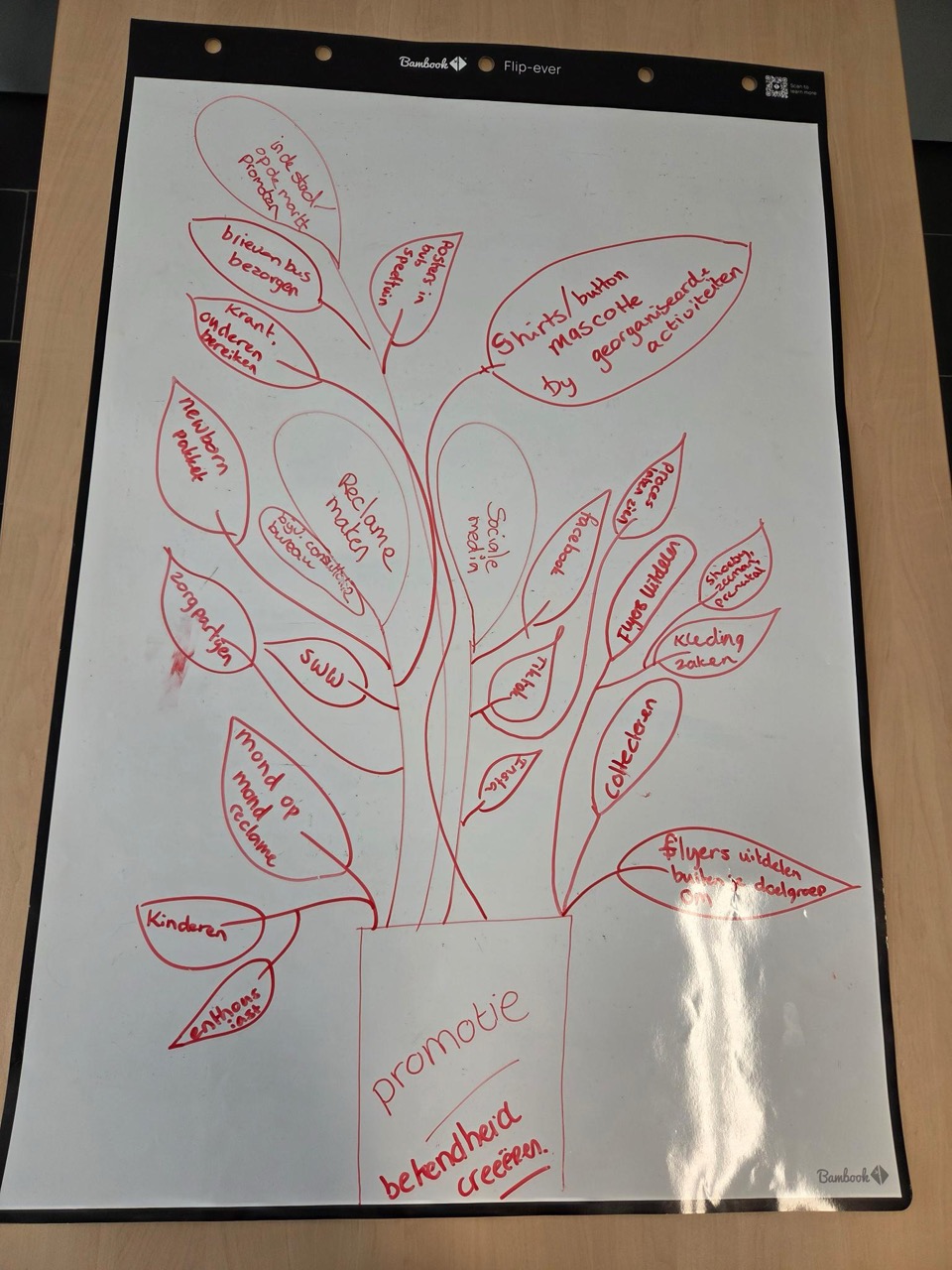
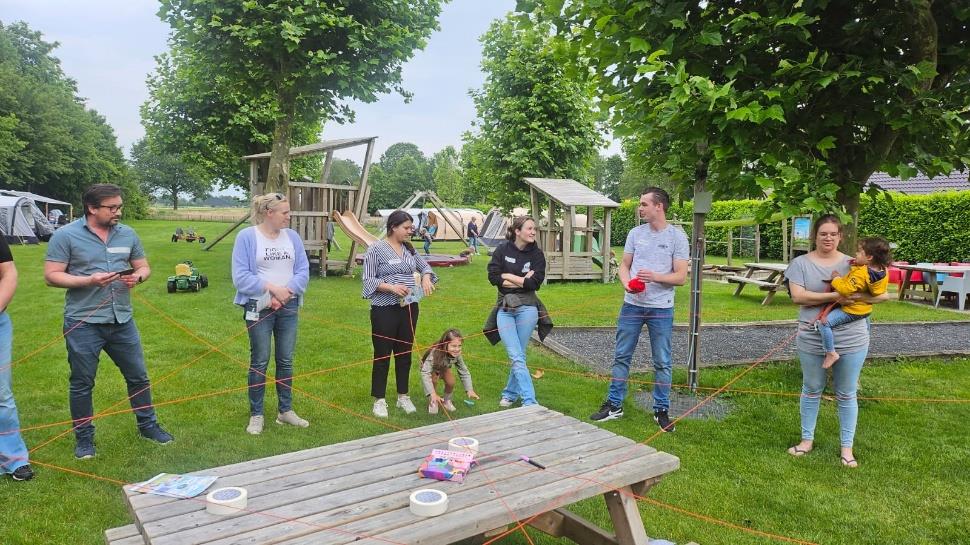
During the PAR, we used various methods appropriate to each phase of the research. We conducted informal conversations and interviews, organized focus groups, and worked in joint sessions using methods such as the Plant method and the World Café. In addition, we visited sites implementing best practices and conducted monthly process evaluations throughout the project.
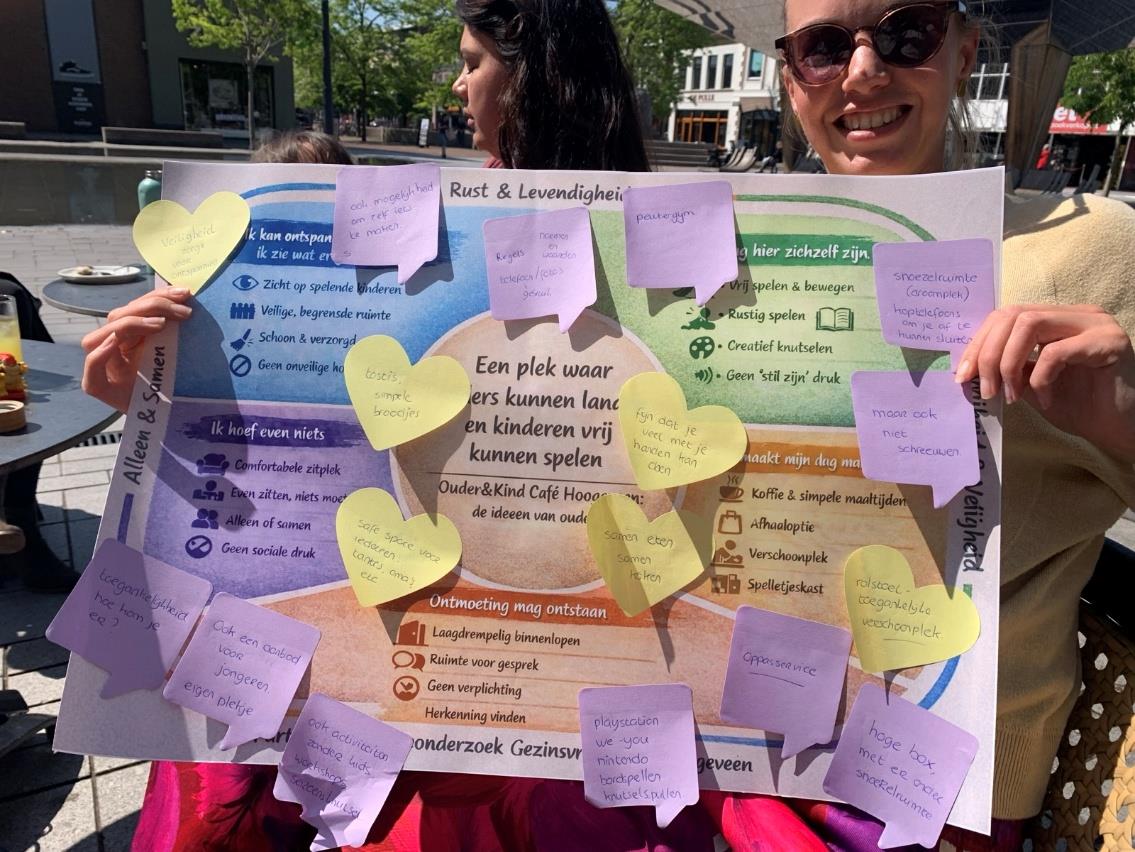
Five themes emerged from the various perspectives of parents:
These themes turned out to be closely interrelated. For example, a safe and well-organized play environment gives parents more space to relax. That relaxation can lead to social interaction, but it doesn’t have to. Not every parent has the same need for social contact. A family-friendly space therefore offers both opportunities for connection and the chance to simply enjoy spending time with your own family.
Although the research began broadly with the question of how to make Hoogeveen more family-friendly, a permanent, accessible space for parents and children increasingly emerged as a potential solution during the PAR. It became clear that such a space could address a variety of needs.
This outcome was then further developed in collaboration with parents. Parents themselves chose topics they wanted to contribute to and, working in small groups, addressed issues such as financial feasibility, promotion, design and decor, and the actual operation of the space.
As a result, the PAR shifted from research and understanding to collaborative design and implementation.
The PAR has led to the further development of Klets & Kruimels: a permanent meeting place in Hoogeveen where parents can relax and children can play freely. It’s a place with space for socializing, playing, simple refreshments, activities, and practical support for families.
The result is therefore not just a concrete plan for a physical space. A group of parents has also become active around the plan, contributing to its realization in various ways. Parents offer input, provide practical help, develop ideas, or take the initiative on their own.
Not everyone contributes in the same way or to the same extent. Throughout the PAR, we’ve learned to make room for different forms of ownership. One person leads an initiative, another contributes ideas during a meeting, and yet another rejoins the effort at a later time.

The ultimate impact of Klets & Kruimels can only be properly assessed once the facility is actually open. However, a clear momentum has already emerged during the PAR. By sharing their experiences, parents have become increasingly involved in devising, designing, and implementing solutions. Ideas regarding fundraising, communication, interior design, activities, and volunteer work are now being developed in collaboration with parents.